Dutch Translator
Upload your documents here for translation
Dutch Translation Services
 Dutch translators - Our NAATI Dutch translators provide fast and accurate Dutch translation services.
NAATI Dutch translator - All Dutch translation services we provide are prepared by experienced NAATI Dutch translators.
Dutch translator service - Melbourne Translation Services Dutch translators deliver Dutch document translation with a 100% acceptance rate for migration and legal purposes in Australia.
NAATI Dutch Translators
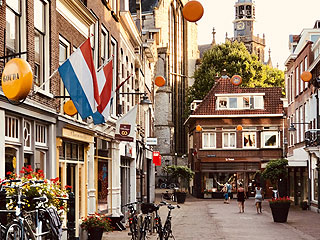 Professional translation services for both Dutch to English translation and English to Dutch translation.
- Fast turnaround times for Dutch translation
- Vetted NAATI Dutch translators with many years' experience
- Certified Dutch translations delivered to Melbourne and Australia-Wide
- Official translation from a translation company
Our Dutch NAATI translators are full-time NAATI translators and experts in migration translation and legal document translation service in Australia.
Document Translation Services
| Dutch brochure translation | Dutch marriage certificate translation | Dutch birth certificate translation | Dutch passport translation services |
| Academic transcript translation | Dutch degree translation | Dutch diploma translation | Dutch driving licence translation |
| Bank statement translation | Dutch payslip translation | Dutch police clearance translation | Dutch death certificate translation |
| Electricity bill translation | Water bill translation | Utility and phone bills translation | Divorce certificate translation |
| Dutch medical translation | Single status certificate translation | Deeds and will translation | Dutch Technical translation |
| Dutch Migration ttranslation | Financial documents | Dutch legal contracts | Emails, Messages and Letters |
NAATI Translation Services in Melbourne, Australia-Wide
- Sydney
- Melbourne
- Brisbane
- Perth
- Canberra
- Darwin
- Hobart
- Adelaide
- Wollongong
- Newcastle
- Cairns
Dutch Typesetting Services
Our Dutch translators assist organisations and businesses in Dutch translation of brochures, labels, namecards, flyers and packaging material.
Read more about our Dutch translation and typeset services and advertising and marketing translation services.
The Dutch Language
The history of the Dutch language begins around AD 450–500 after Old Frankish, one of the many West Germanic tribal languages, was split by the Second Germanic consonant shift. At more or less the same time the Ingvaeonic nasal spirant law led to the development of the direct ancestors of modern Dutch Low Saxon, Frisian and English. The northern dialects of Old Frankish generally did not participate in either of these two shifts, except for a small amount of phonetic changes, and are hence known as Old Low Franconian; the "Low" refers to dialects not influenced by the consonant shift. The most south-eastern dialects of the Franconian languages became part of High—though not Upper—German even though a dialect continuum remained. The fact that Dutch did not undergo the sound changes may be the reason why some people say that Dutch is like a bridge between English and German. Within Old Low Franconian there were two subgroups: Old East Low Franconian and Old West Low Franconian, which is better known as Old Dutch. East Low Franconian was eventually absorbed by Dutch as it became the dominant form of Low Franconian, although it remains a noticeable substrate within the southern Limburgish dialects of Dutch. As the two groups were so similar, it is often difficult to determine whether a text is Old Dutch or Old East Low Franconian; hence most linguists will generally use Old Dutch synonymously with Old Low Franconian and mostly do not differentiate.
Who We Work With
